
 All Culinary Chronicles
Draeger’s Guide to Pears
It’s the pear-fect season for a sweet, juice piece of fruit! Learn a little more about the types of pears Draeger’s has to offer.
Side Note: Why is it that we only see duck confit legs? Duck breast is incredibly lean, and the prolonged cooking can make it rather dry. You can confit a duck breast, but they are better served like a red meat, cooked medium rare.
PICKING THE PERFECT PEAR
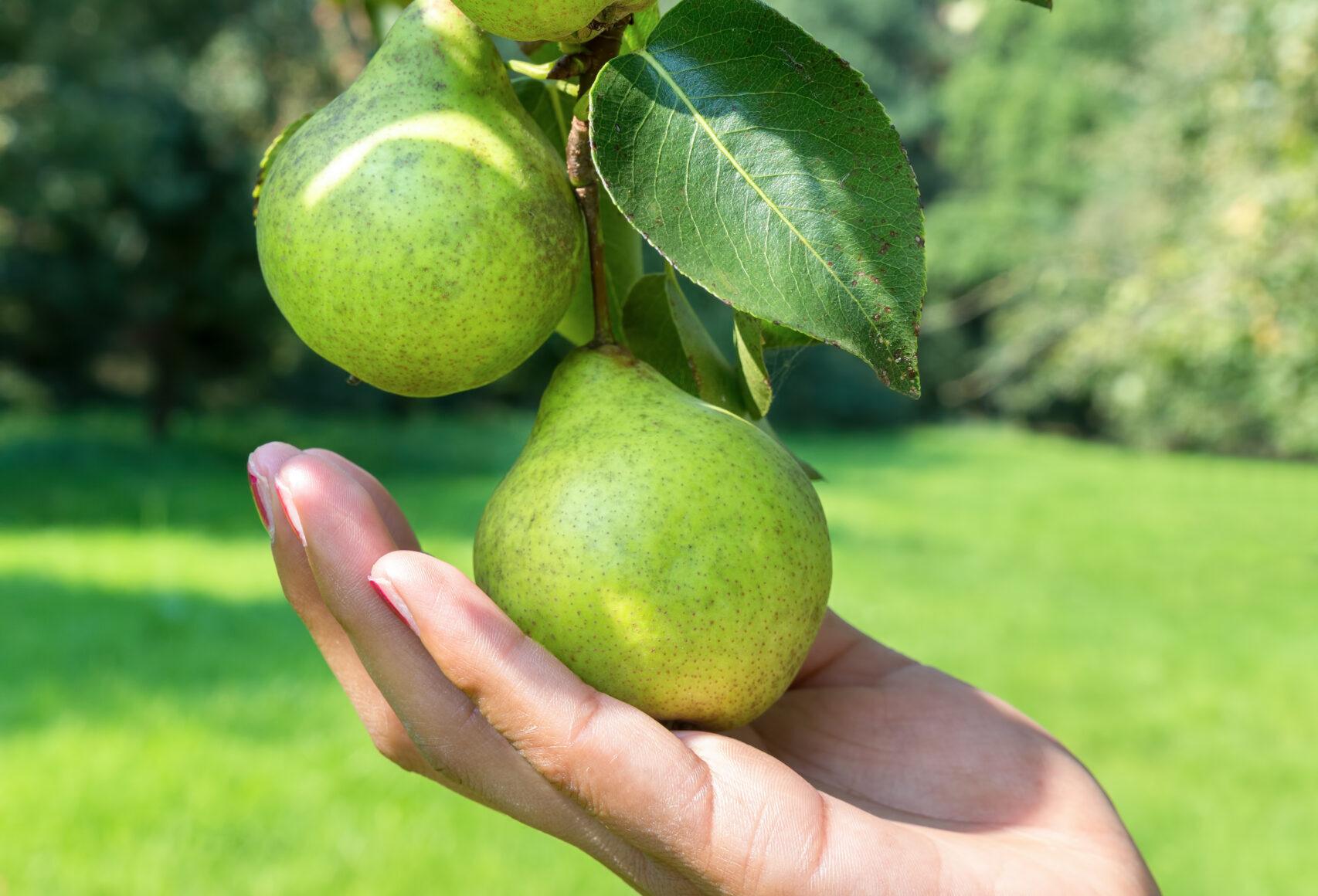
Pears do not ripen on the tree; they ripen from the inside out after being picked. The best way to ensure you are selecting a ripe fruit is to gently press on the neck of the fruit near the stem. If the fruit has a little give, it’s ready to be enjoyed. Some pears will change colors as they ripen, but not all varieties, which is why the ‘push test’ is the best way to judge ripeness.
BARTLETT
Description
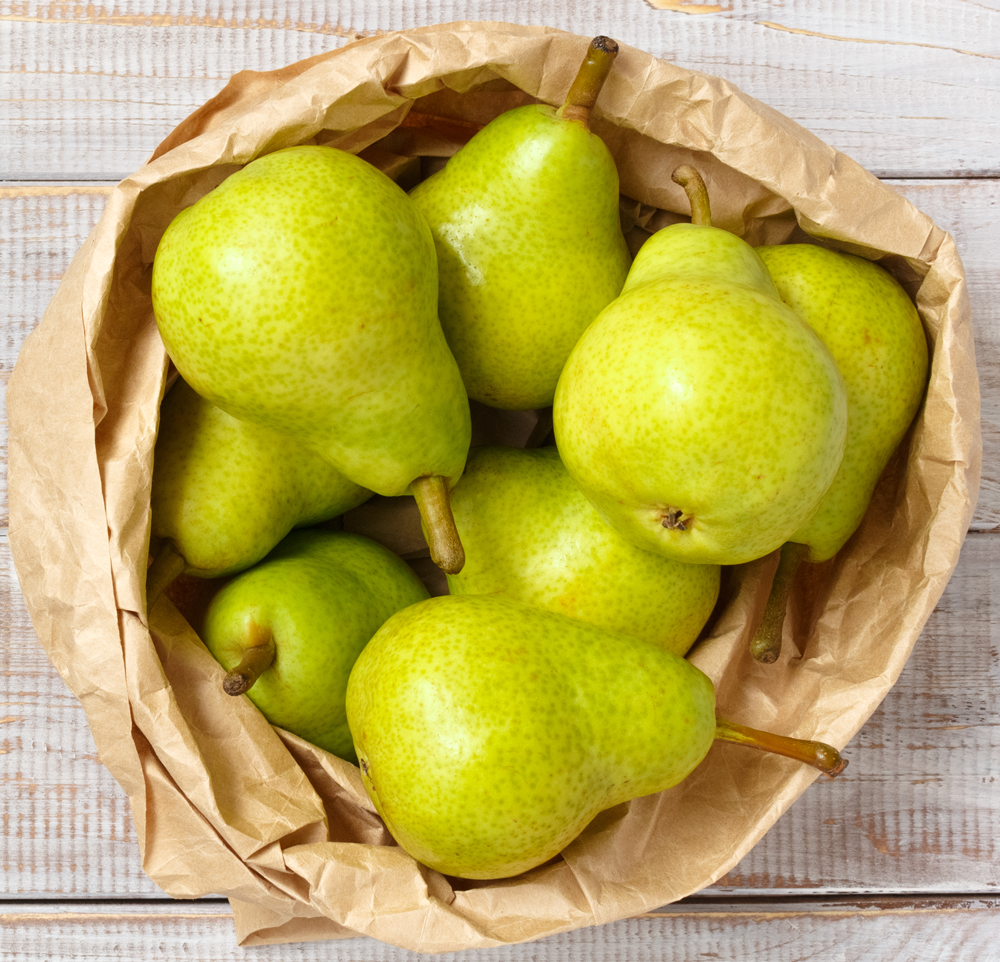
Also known as the Williams pear, this is by far the most common pear variety in the United States, Europe, and Canada. With lovely green skin that can blush rouge when ripe, bell-shaped Bartlett pears are the quintessential end-of-summer fruit. Their fine-grained, ivory flesh is aromatic and moist. When fully ripe, they develop a juicy, smooth, and buttery texture.
Culinary Applications
This is one versatile pear! Bartletts can be enjoyed fresh as is, or used in baking or grilling. For savory suggestions, use them to layer in grilled cheese or thinly slice them as a pizza topping. On the sweeter side, Bartlett pears are used in many preserves, jams, syrups, muffins and pies. Complimentary flavors are very broad- everything from gorgonzola cheese to walnuts, garlic, onions, mint, basil, cinnamon, honey and matcha green tea powder will ‘pear’ with Bartletts!
Storage
Bartlett Pears will keep up to three weeks when stored in the refrigerator and a little over one year when stored in the freezer.
BOSC:
Description
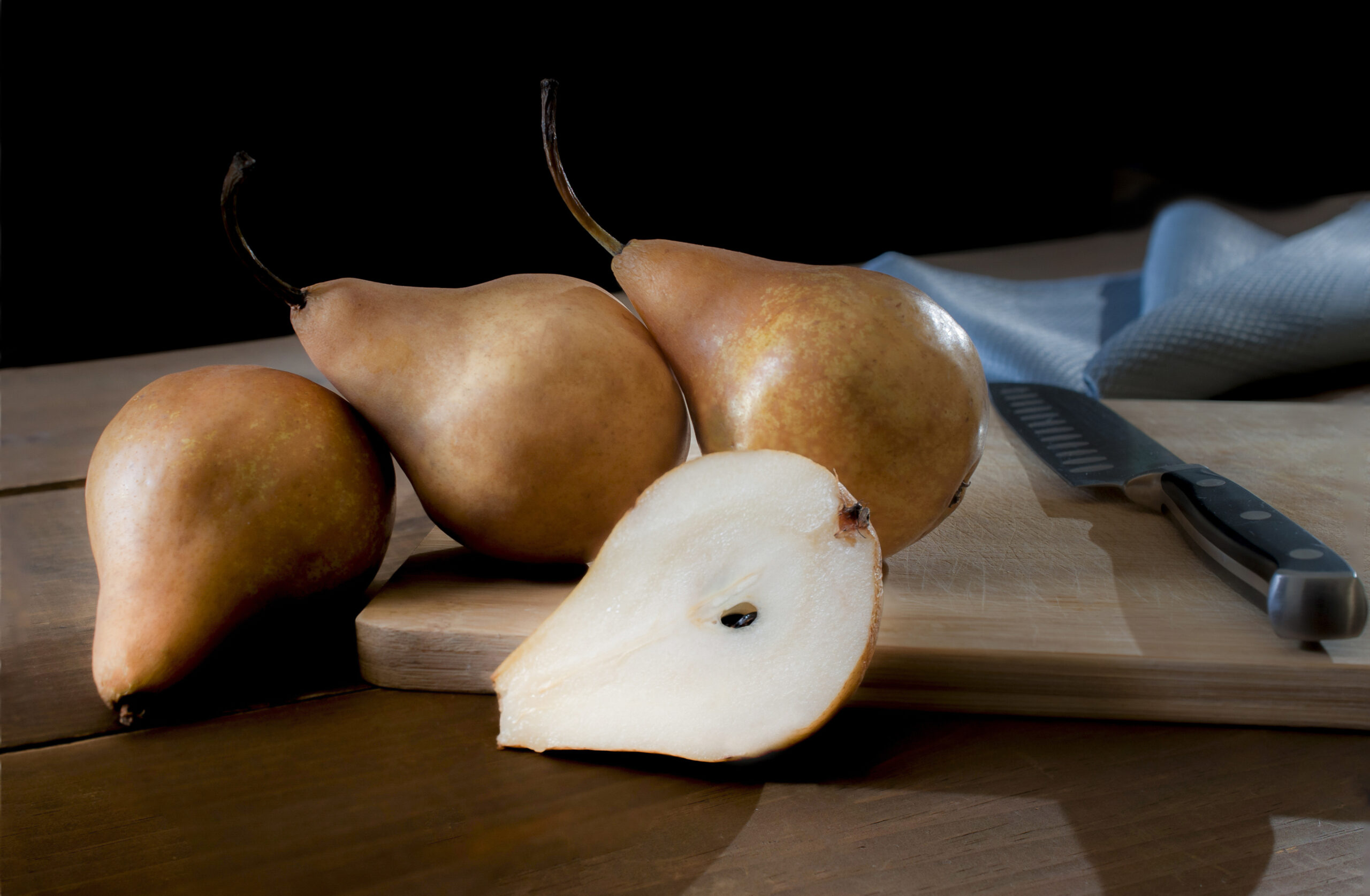
Also known as the Kaiser pear, these European natives are now also grown in Australia, British Columbia, Ontario, Canada, and the northwestern U.S. states of California, Washington, and Oregon! The ‘Beurre Bosc’ was named after French horticulturist Louis Bosc, and the pear’s nickname “Beurre” means “buttery,” referring to the fruit’s soft, juicy texture. With golden brown skin and a long tapered neck, the Bosc pear is the “aristocrat of pears.”
*A Note On Names: Almost every fruit is known by multiple names. We like to label these aliases if we can you never know when you can impress someone with your trivia!
Culinary Applications
Another adaptable pear variety, Bosc pears are delicious fresh with their sweet yet slightly spiced flavor. They are fantastic dipped in dark chocolate or layered on a charcuterie board. They maintain their shape well even after cooking, which makes them ideal candidates for tarts, pies, glazing and poaching. They go well with hazelnuts, clove, dates, burrata, goast cheese, honey, chicken and pork.
Storage
Bosc pears should be kept at room temperature until ripe and will keep up to an additional week when stored in the refrigerator.
*Note: Bosc pears give less than other pear varieties when ripe.
COMICE
Description
Comice pears are a very interesting hybrid pear with the reputation of being the plain, old “Common Pear.” Nothing ‘common’ about this pear though! It is thought that the Comice pear is descended from two subspecies of wild pears which were infertile with other species of domesticated pears. Somewhere along the line in history, archeological evidence shows these pears “were collected from the wild long before their introduction into cultivation.” Comice pears hold the record as the most reliable pear grown across eastern and central Europe and western Asia. Drought tolerant and prolific, Comice pears are succulent, flavorful fruits that have a distinctly ‘squat’ shape and tend to blush in the direction they saw the most sun. Their highly aromatic off-white flesh has a silky, creamy, moist texture and an exceptionally sweet, mellow, and earthy flavor.
Culinary Applications
Best suited for fresh applications, these luscious fruit do not hold up well to cooking. Try pairing them with creamy cheeses for complementary flavor, or adding them to fresh green salads. Comice pears compliment rosemary, cardamom, cinnamon, anise, curry powder, turmeric, garam masala, raisins, almond, hazelnut, pecans, chestnuts, chicken, coconut, onion, garlic, sweet potatoes, arugula, cilantro, maple syrup, camembert, gorgonzola, blue, and brie cheese.
Storage
The delicate skin of the Comice pear bruises and tears easily, but when handled properly, the pears will store well. They will keep 2-6 weeks when stored in the refrigerator. When kept at room temperature, they will only keep for a couple days.
D’ANJOU
Description
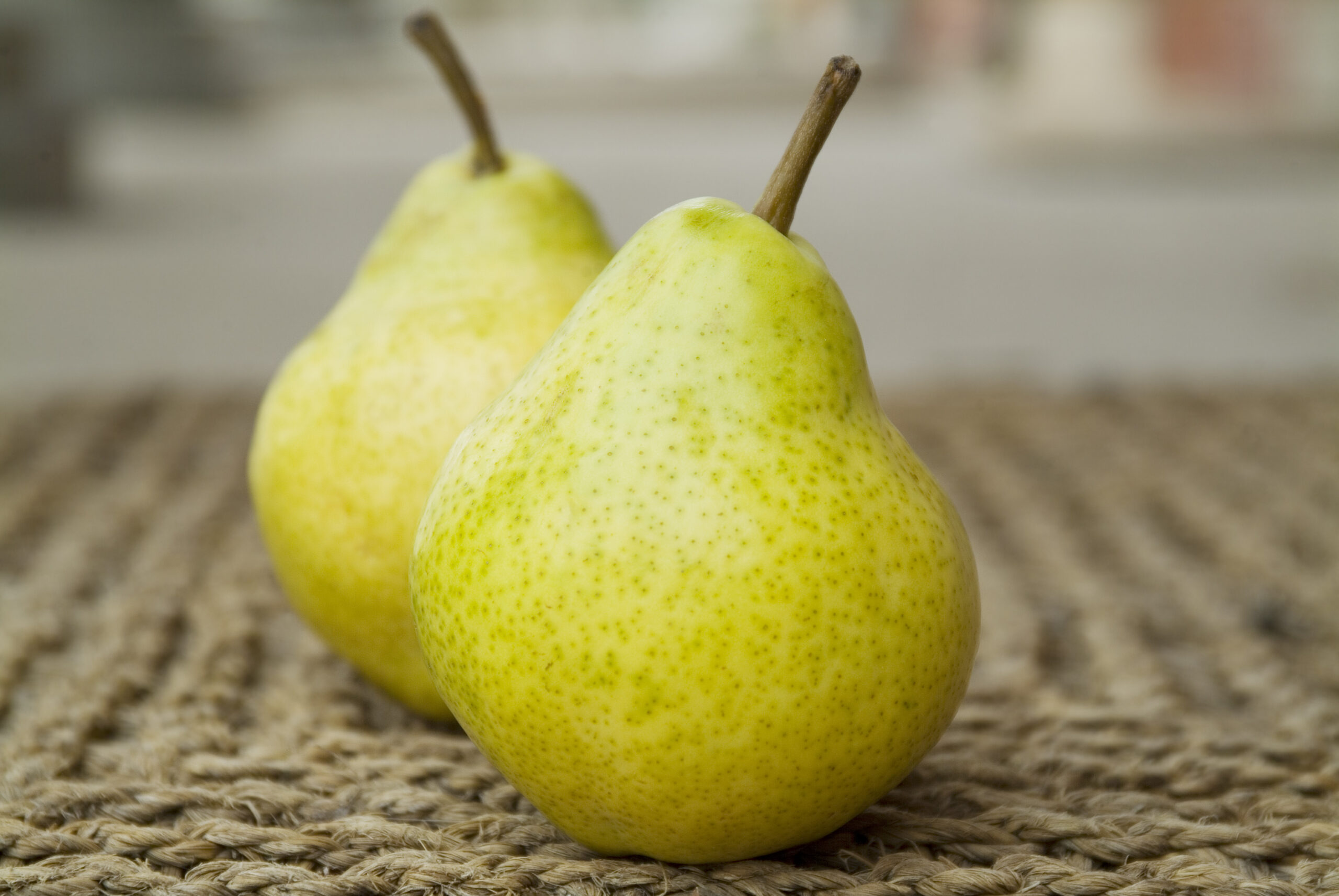
D’Anjou pears, sometimes simply referred to as Anjou pears, are short and squat with bright green skin that does not change color as the pear ripens, like some other pear varietals. Inside, the cream-colored flesh is dense and buttery with a slightly gritty texture. When ripe, Anjou pears are juicy and soft with subtle aromatic, sweet flavors and notes of lemon and lime. In fact, Anjou pears are so tasty that Jelly Belly picked them to be their iconic ‘Jelly Belly Pear’ flavor!
Culinary Applications
Excellent for both enjoying fresh and cooking. Try layering fresh Anjou pear slices in a turkey and brie sandwich or wrap prosciutto around slices as an appetizer. Particularly good for baked goods because they hold their shape well, Anjou pears can be used in the classic pies and tarts, but also for sauces and purées. Complimentary flavors include arugula, fennel, mushrooms, red onion, balsamic dressing, Greek yogurt, Brie, and Camembert.
Storage
D’Anjou pears will keep for a long time- up to 4-5 months when stored in the refrigerator.

RED ANJOU
Description
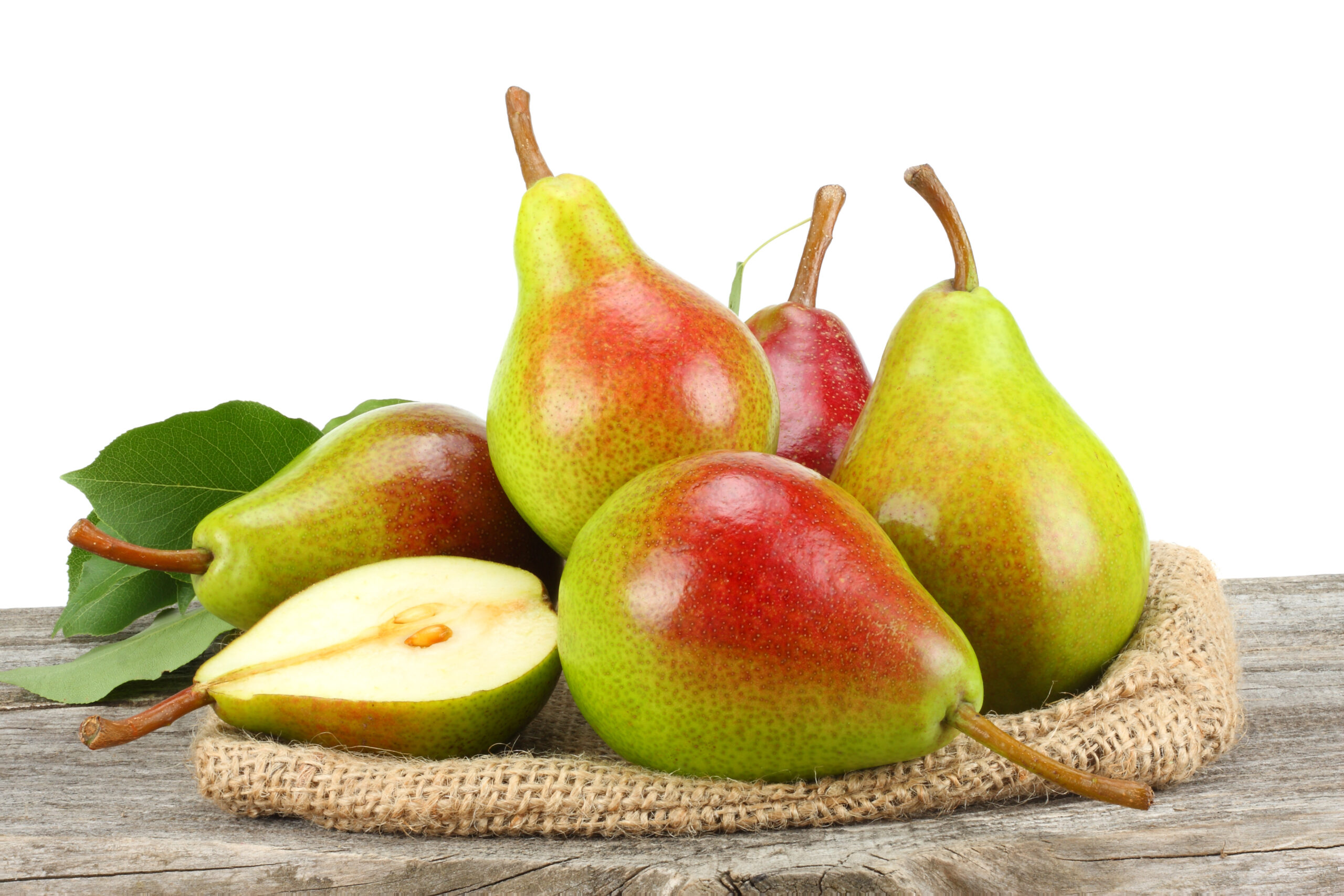
The sister pear to the Green Anjou, Red Anjou pears have the same squatty shape, only their outer skin can range in color from dark maroon to a lighter crimson. Just as the green Anjou, a unique feature of this pear is that skin retains its color as it ripens. The flesh inside has the same citrus lemon-lime hints in its succulent, dense, and slightly grainy texture.
Culinary Applications
Both Red and Green Anjou pears can be used interchangeably in recipes, but the Red Anjou adds an extra pop of color with its lovely rusty color. Traditionally gifted in baskets at the holidays, these pears add a punch of color to any cheese platter, chopped into a fruit Pico de Gallo for pork tacos, sliced and layered into a Banh Mi sandwich, or paired with flavors like garlic, cilantro, lemongrass, basil, radicchio, kale, arugula, almonds, pecans, walnuts, cinnamon, and cardamom.
Storage
D’Anjou pears will keep for a long time- up to 4-5 months when stored in the refrigerator.
STARKRIMSON
Description
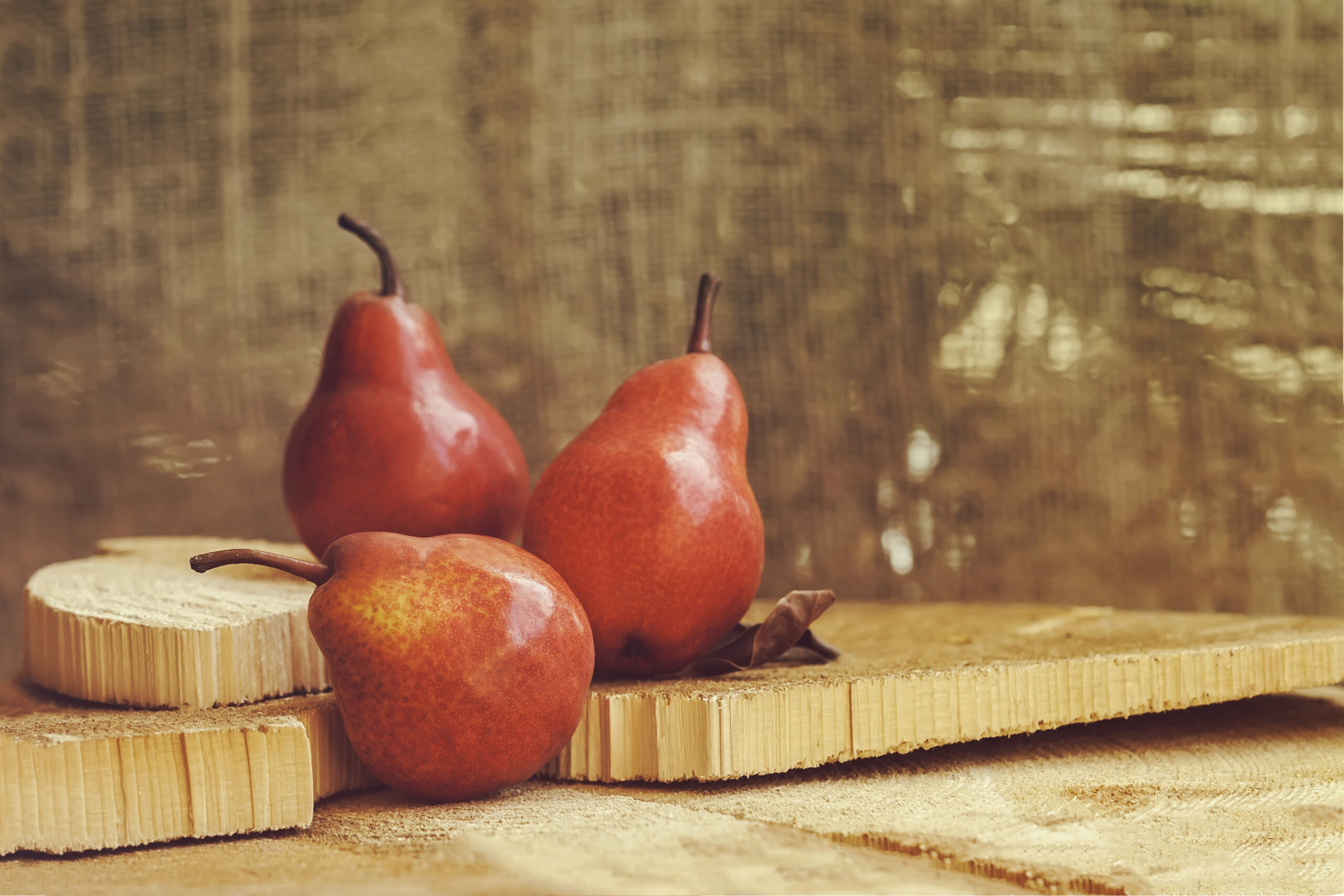
Starkrimson pears have a traditional pear shape with a wide, bulbous bottom and a tapered, rounded neck. A mutation of the Comice pear, the awesome name for these pears comes from a combination of the color of the fruit and the Stark Bros company, who owns the rights to grow the variety. But, as we noted, there is never just one name for a fruit! Also known and Kalle or Red Clapp pears, this variety is one of the earliest varieties available during pear-season. Deceptively, these pears have a red skin that may be mottled with dusty green hues until fully ripe, with it become bright red. Crisp, creamy and floral, they offer a mildly sweet-tart flavor.
Culinary Applications
Best showcased raw, these pears are delicious sliced and mixed into pasta salads, fruit salads, and green salads or paired with strong cheeses on a charcuterie board like Gorgonzola. Or, try serving them with pesto and burrata as an appetizer, or dice them to top cereal and yogurt bowls.
Storage
Starkrimson pears will keep up to three weeks when stored in the refrigerator and for a couple of days when stored at room temperature.
TRY SOMETHING NEW: HOSUI ASIAN PEARS
Description
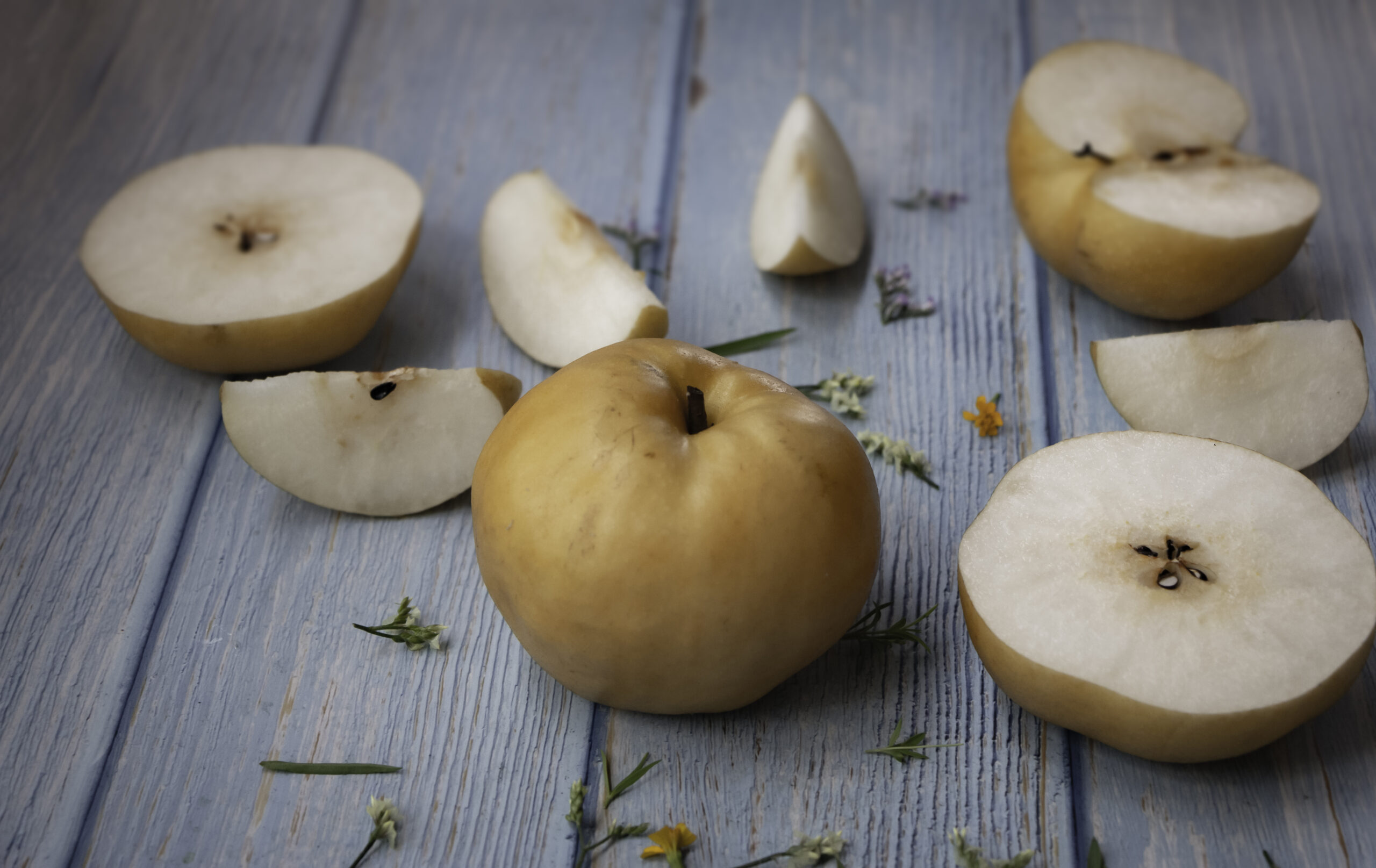
Hosui pears, originally cultivated in Japan in the 1970’s, are taking California by storm! Their name ‘Hosui’ roughly translates to mean ‘much water,’ a reference to the luscious flesh within its golden-bronze skin. Fine-grained texture with a slightly acidic tang, these pears have a deeply complex flavor with vanilla and brandy-like undertones.
Culinary Applications
Hosui pears are best when enjoyed fresh, straight out-of-hand. The skin can be eaten, but traditionally in Japan the skin is peeled before eating and then cut into slices and elegantly arranged on a decorative plate. Beyond being enjoyed fresh, Hosui pears can be juiced for beverages or cooked into jelly for use in desserts and boxed sweets baked preparations. They make for rich pear-based desserts and pair well with other fruit like strawberries, blueberries, as well as vanilla, ginger, and honey.
Storage
Whole Hosui pears will keep 1 to 3 months when stored in the crisper drawer of the refrigerator.